

Polymath School of Morioka
Polymath School of Morioka is an autonomous, decentralized Montessori school built on homeschooling. For children aged 3–12, it offers a program for acquiring a truly cosmic education. As a field experiment in a universal growth system that is both necessary and sufficient for a Type II planetary civilization, it aims to be “the most intelligent school on Earth.”

What We Mean by “The Most Intelligent School on Earth”
We believe that intelligence can be measured quantitatively by one’s degree of understanding of the universe. A high degree of understanding of the universe shows itself in the accuracy of one’s predictions about the future. For example, if you know nothing about the universe, you cannot accurately predict the phenomena that occur in the universe; if you know nothing about Earth, you cannot accurately predict the phenomena that occur on Earth. We believe that intellectual ability can be approximated by asking, “Up to what scale can one make accurate predictions?”
At Polymath School, we define “the most intelligent school on Earth” as the school with the most efficient training system on Earth for the development of that kind of “intelligence.”
About the Operators
Polymath School is run by Polymath Research, a non-profit think tank.
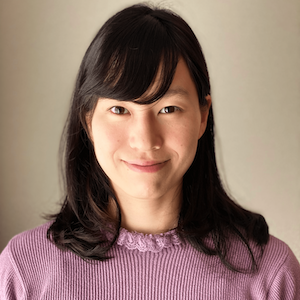
OBARA Yachiko
Principal, Polymath School of Morioka
Born in 1989 in Fukuoka, Japan. Representative of Motherhand Inc. Co-Director of the think tank Polymath Research. M.Eng. Association Montessori Internationale (AMI) certified teacher. Montessori developmental theory researcher. AI researcher. Mother of two.
”At university I researched quantum physics. Drawing on my background in AI research with the mathematical sciences team at IBM Research and on the Montessori educational theory I learned while raising my children, I want to devote myself to creating super-intelligent, super-free, and super-fun environments for children.”
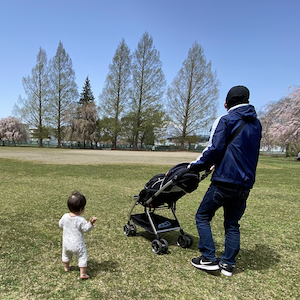
OBARA Hiroki
Caretaker, Polymath School of Morioka
Born in 1990 in Iwate, Japan. Representative of StudyX G.K. Co-Director of the think tank Polymath Research. Software developer. Father of two.
”Above all else, Polymath School values the intellectual curiosity, the spirit of inquiry, and, most important of all, the spontaneity of the children who will shape the future.”
What Makes Polymath School Different
Polymath School is an entirely new model of alternative school. It has features that no other school has: a number of unique characteristics.

A Polymathic Education Program
We offer a polymathic education program based on our own developmental theory, which integrates and builds on Montessori developmental theory and the latest academic research. In our theory, the ideal is a growing environment in which children grow up as polymaths rather than becoming narrowly specialized. We propose a new model of intellectual growth as an alternative to the existing academic system, which treats the “specialist” as the final form of an intelligent life form.
French Style
Resonating with the French spirit of putting the enjoyment of life first, living with long holidays, rich food, and the arts at the center, Polymath School places the highest importance on “rest and play.” Our top priority is improving the quality of “eating, exercise, and sleep,” and we strive to create an environment where everyone is healthy in body and mind and can grow up large and unhurried, both physically and mentally. There is a three-month summer vacation (June–August) and a three-month winter vacation (December–February).
A Twice-Weekly Education Program
Polymath School is an education program built on homeschooling that meets twice a week (Thursdays and Fridays) from 11
to 14. On the premise that the quality of education within each family will be raised, we use a high-level curriculum based on Montessori “Cosmic Education.”A Mobile Style That Is Always on the Move
Rather than having children commute to a fixed location, Polymath School’s default is to be out and about in all kinds of places. Inspired by Montessori “Going Out,” and making the most of Iwate’s rich natural environment, we hold our activities in a different place each day: forests, sports parks, libraries, museums, science centers, art museums, gymnasiums, and more in and around Morioka.
* As a rule, we meet on site, so each family is responsible for its own drop-off and pick-up.
An Intellectually High-Level Curriculum
Polymath School’s programs demand a higher intellectual standard than existing programs.
In the Pre-Elementary program for ages 3–6, as preparation for the Elementary program, children integrate the senses and movement and advance their intellectual understanding of language, numbers, and culture.
In the Elementary program for ages 6–12, children continue to strengthen their intellectual understanding of language, numbers, and culture while immersing themselves in a vast and profound intellectual exploration of the universe, Earth, and life.
Through these curricula, we nurture the children’s inner spirit.
Grounded in Educational Theory Based on the Latest Academic Research
At Polymath Research, we continuously pursue research on developmental theory and educational theory, drawing on leading peer-reviewed scientific journals such as Nature and Science. In our Montessori education research, too, we build on international curricula and the latest academic papers, and strive to conduct research of a world-class standard.
Focusing Only on the Physical Requirements of Montessori Education
Schools based on conventional Montessori education have a greater educational impact than conventional mainstream education. At the same time, however, they need abundant resources to achieve that impact: excellent teachers, high-quality materials and teaching aids, and comfortable facilities that can accommodate many children.
These are expensive to maintain, which has led to very high tuition.
We saw the “unsustainability” of this “Do more with more” structure as a problem, and focused solely on the physical requirements for children’s healthy development. Then, by adopting an autonomous, decentralized architecture built on homeschooling, we succeeded in shifting, in theory, to a “Do more with less” structure that achieves the maximum results with the minimum.
Programs
About the Pre-Elementary Program (Ages 3–6)
Mission: “Maximizing the quantity of intellectual experience”
We provide an environment where children can learn from many challenges and failures while making the most of their intellectual curiosity.
Children integrate sensory input and motor output, and advance their intellectual understanding of language, numbers, and culture.
We train the brain’s prefrontal cortex and comprehensively strengthen self-control and spontaneity, enabling children to act on their own.
* This is an original program based on Montessori education (the 3–6 Primary course) and nature education.


About the Elementary Program (Ages 6–12)
Mission: “Maximizing the quantity of intellectual discovery”
We provide an environment where children can learn about survival in the universe while making the most of their spontaneity and spirit of inquiry.
Continuing from the program for ages 3–6, children keep strengthening their intellectual understanding of language, numbers, and culture, and begin a vast and profound intellectual exploration of the universe, Earth, and life.
We further train the brain’s prefrontal cortex and comprehensively strengthen thinking and problem-solving abilities, enabling children to think independently.
* This is an original program that combines Montessori education (the 6–12 Elementary course) with Synergetics (cosmic geometry).


Other Event Programs
We hold a variety of event programs from time to time, set in Iwate, a region rich in nature, culture, and history.


Enrollment
On April 1, 2025, we launched the Primary program and the Lower Elementary program. On October 1, 2025, we launched the Infancy program. On March 31, 2026, we ended the Infancy program and the Primary program. On April 1, 2026, we launched the Pre-Elementary program.
- Pre-Elementary program (ages 3–6): for intellectually curious children aged 3 to 6
- Lower Elementary program (ages 6–9): for children aged 6 to 9 with strong spontaneity and a strong spirit of inquiry
- Schedule: Both programs meet twice a week (Thursdays and Fridays), 11–14
- Location: Shared with members only. (We hold our activities in a different place each day: forests, sports parks, libraries, museums, science centers, art museums, gymnasiums, and more in and around Morioka.)
- Notes: As a rule, please bring your own lunch. (We sometimes cook outdoors.)
- Requirements for participation: Sharing the school’s philosophy, being able to communicate smoothly, and having sufficient intellectual stamina
Fees and Capacity
- Polymath School of Morioka tuition: Free for both Elementary and Pre-Elementary (families pay actual costs only)
- Activity insurance: At cost (on enrollment, you will be asked to take out “Sports Safety Insurance” (Sports Anzen Hoken). Each family chooses its own plan; the cost is about ¥1,000 per year.)
- Other facility fees, etc.: At cost (admission fees and the like are paid by each family directly to the facility when they arise)
- Capacity:
Pre-Elementary program (ages 3–6): 5 children
Lower Elementary program (ages 6–9): 5 children
How to Apply
- If you would like to enroll, please email the Polymath School address with the following information: names (parent and child), ages (parent and child), address, phone number, and your reasons for applying
- Applicants who wish to enroll will take an admission test (a comprehensive assessment of intellectual development, emotional development, social skills and more) and have an individual interview, after which we will make a decision
(* Applicants who do not meet the “Requirements for participation” above are not eligible.) - Those who are accepted will receive separate details and further information
Contact
Please feel free to send any questions or requests for advice to the email address below.
- Email: psm@studyx.app
FAQ
We will post answers to frequently asked questions here.
Is there a program for ages 12–18?
A Secondary program for ages 12–18 is being planned. We are planning it in the Erdkinder style (a boarding farm school), like the Secondary program in Montessori education.
I’d like to try it out first
Please join one of our event programs. For details, email the Polymath School address with the following information: names (parent and child), ages (parent and child), address, and phone number.
What is Montessori developmental theory?
Montessori developmental theory holds that children have the power to develop by themselves, and that an environment suited to each stage of growth is essential. It divides development into sensitive periods (times when particular abilities develop rapidly) and four planes of development (ages 0–6, 6–12, 12–18, and 18–24), and advocates education suited to each. Children are beings who grow through self-education, and adults serve as guides who support that process.
What is your own developmental theory?
At Polymath Research, building on Montessori developmental theory, we study the development of life in general from the standpoint of physics. → Added 2026/06/27: We have published the Fractal Development Theory
Aiming to be “the most intelligent school on Earth”? Surely you’re joking?
Maybe we are, and maybe we aren’t.
Support
The school is run by Polymath Research.
(Operational support: StudyX and Motherhand provide full operational support.)
- Polymath School of Morioka Statement of Purpose
- Polymath School of Morioka Guidelines
- Privacy Policy
Updated 2026/06/27